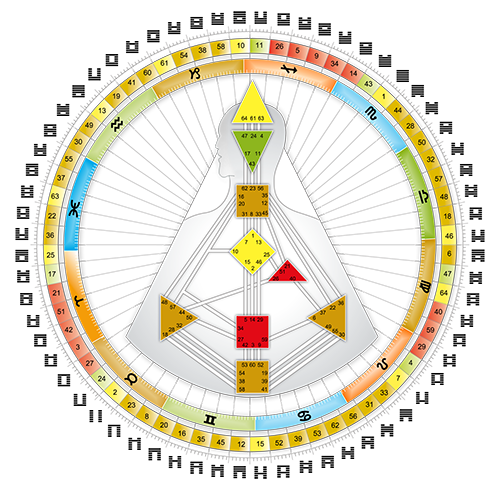
At 9 they called you slow. At 35 you still force it.
You remember comparing — not out of cruelty, out of concern. Today she lives forcing initiative that goes wrong. And she still thinks the problem is not trying hard enough.
There's a reason adult Projectors push themselves for productivity. They weren't born that way. They were compared with Generator siblings while still children — and taught that observing before acting was laziness.
Your specific chart
, this post starts for whoever raised you. But it was written for you.
You were nine years old.
It was Saturday morning. You were sitting on the couch looking out the window. You weren't doing anything visible — you were observing. Maybe the neighbor working on his car. Maybe the light changing in the yard. You couldn't have explained it to anyone.
Your mother came into the room. She looked at you. She said: "Get off the couch. Go do something. Your sister already swept the whole yard, and you sit there doing nothing."
You had no answer. The body hadn't asked to sweep the yard. But the internal observation was immediate and clear: I'm slow. I can't keep up like her.
Then you did the thing that would mark you.
You got up and started. Anything. To prove it.
You swept the yard badly. Tripped on the bucket. Didn't see the dirt in the corner. Your mother asked you to do it over. You felt the idea gain weight: she's right. I really am.
And there began a loop that lasted twenty years.
Every time you couldn't move at the rhythm of others, you forced initiative to compensate. Forced — without a genuine invitation, without your system being activated — the initiative failed. It failed because it came from a place that wasn't yours. The failure confirmed the label. You forced more. You failed more. I'm slow. I don't try hard enough.
As an adult, you still do this. Not with a broom — with projects, relationships, decisions. You still initiate to prove yourself. And you still fail in ways that confirm exactly what they told you at nine.
What no one explained to you: the Projector doesn't have a defined Sacral. It wasn't built to generate constant energy from the inside out, like a Generator or MG. It was built to observe, read, and contribute when invited — and observation before action is the main tool of your system, not a failure of initiative.
But you grew up in a world where an active child is a healthy child. Where the one who sits looking out the window is worrying. Where "this child doesn't try" is a diagnosis, not a difference of design. And no one — not your mother, not your grandmother, not your teachers — had the vocabulary to say: "this child is a Projector. Observing is what she does."
So they did what seemed right: they tried to activate you. They compared you with your Generator sibling. They asked you to "do something." It wasn't malice. It was the whole cultural model operating on a child who was an exception and no one knew how to recognize.
The mechanical effect installed two things that still operate today. First: you confuse observing with not-doing. When your body asks you to wait before acting, you hear that as laziness and force action to compensate. Second: you can no longer distinguish a genuine invitation from just any opportunity. Everything that looks like activity becomes an attempt to prove yourself — and an attempt to prove yourself doesn't activate your system. It only spends your reserve.
In your case your authority has its own channel that operates after the real invitation. But the reflex of proving you're not lazy skips that channel — you decide before the authority appears, in the impulse to show movement. The decision is made by fear of the label, not by internal clarity.
It's not that your mother was wrong. She compared with what she knew — an active child looked healthy, a quiet child looked worrying. She was probably charged the same way in childhood. The correction crosses generations.
But the mechanical effect is the same: your system today operates under constant suspicion of laziness, and that suspicion generates the behavior that confirms the suspicion.
Recovering begins with a distinction no one taught you: observing isn't avoiding. Waiting isn't laziness. Your system was built to read before acting — and every time you respect that, even without looking productive on the outside, you're operating as you should. Every time you force yourself to prove something, you're executing the label, not responding to it.
The person who raised you and saw you "sitting still on the couch" wasn't wrong to worry, in the world they were raised in. But maybe they can, today, look at the same scene and recognize: she was reading the environment. That's how she works.
And you, as an adult, can finally stop sweeping a yard no one asked you to.
You weren't lazy. You were compared with a system that wasn't yours — and you spent twenty years trying to prove you were what you never were.
Now, the question that demands an answer
You just read about At 9 they called you slow. At 35 you still force it..
Is this really about you?
Without your Chart, you are reading about someone. It might be you. It might not. And there is no way to know.
We take Human Design so seriously that even the experience we prepared for you here is unique. Because two people of the same Type can read exactly this post and need completely different guidance — depending on the activations, the gates and the channels that make up each chart.
Your Chart reveals which of these people you are.
By creating your Chart for free, the site starts to recognize:
- Your Type
- Your Strategy
- Your Authority
- Your Profile
The content stops being generic and starts speaking specifically to you.
CREATE YOUR FREE CHART NOW- ✓ Free
- ✓ No credit card
- ✓ Your Chart saved to your account