At 6 she informed. They taught you it was asking.
You remember wanting to teach manners. She had already thought about the timing, the channel, about you. Today she paralyzes every time she has to decide alone — and even she doesn't know why.
There's a difference no one taught you to distinguish: between informing before acting and asking permission to act. Manifestors were trained in the second, still children — when their system was built for the first.
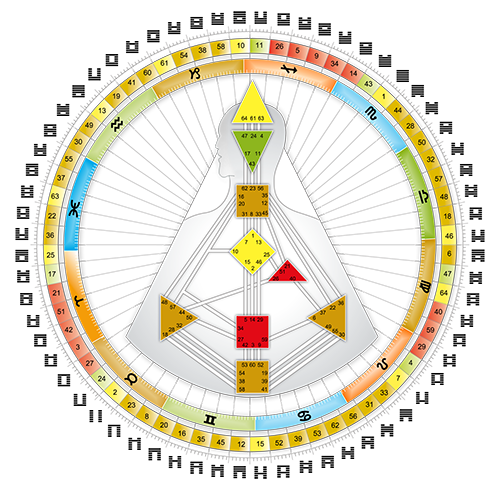
Your specific chart
, this post starts for whoever raised you. But it was written for you.
You were six years old.
You were alone in the living room. You decided to turn on the television — you wanted to watch cartoons. You picked up the remote, pressed the button, sat on the couch. Simple decision, quick gesture. Before you pressed the button, something happened inside: you thought about the time, you knew your mother would come in soon to have coffee, and you turned it to the right channel — so that when she sat down everything would already be set. Not to please. So that she wouldn't have to fuss with it.
That thought was your system working.
The Manifestor is the only type built to initiate without needing an external response. But the design isn't just acting — it's decide, inform, act, in that order, in a quick and fluid sequence. Informing isn't asking permission. It's a heads-up so whoever will be affected can adjust. It's the gesture that reduces impact without transferring the power to decide.
You, at six, were already doing that. Not with words — with a gesture. The right channel, at the right time, was the child's way of informing before the action.
But your mother came into the room, saw the TV on, and said: "Who gave you permission to turn on the TV?"
Something in you wanted to explain. "Mom, I knew you were going to come in soon. That's why I turned it to your channel — so it'd be ready when you sat down." But you didn't have the vocabulary to defend the logic, and you probably weren't heard when you tried. What your mother wanted was different: that you had asked first if you could. That she be the source of the decision, not the beneficiary of the timing.
You learned fast. The next time, you asked. You didn't inform — you asked. You waited for the answer. You accepted the no when it came. You didn't act in the absence of approval.
And it kept accumulating. "Ask permission to leave the table." "You can't just decide." "Ask first." Each sentence taught the same thing: the natural sequence of your system — decide, inform, act — was broken and replaced by another: decide, stop, ask, wait, maybe act.
The gap between deciding and acting, which in your design is filled by the gesture of informing, became a space of authorization anxiety.
Twenty years later, you still operate this way.
You can't make small decisions without consulting someone. You buy a pair of shoes and send a photo to your partner before paying. You accept a project and check with your boss whether it's a good idea. You arrange dinner with a friend and ask the other group if the schedule works. Not because you don't know — you know. But the gesture of initiating without prior permission generates anxiety so concrete it feels like a physical symptom.
Or you operated through the opposite extreme. You learned the rule, but resisted it. You do first, justify after, and each justification carries a defensiveness that ruins relationships before they even need to be defended.
Or you made the third choice — you stopped initiating anything that could be questioned. You live in low-friction situations. Freelance work, relationships where no one holds you to account, a life planned to avoid the moment when the "ask permission" would come back.
The three different expressions have the same origin and the same central symptom: when the authority figure disappears — the boss leaves, the partner travels, the father dies — the paralysis doesn't come from not knowing what you want. It comes from having no one to ask. The system was calibrated to have a receiver for the permission-request. When that receiver isn't available, the sequence jams before it begins.
It's not lack of autonomy. It's the wrong mechanism installed at the right timing.
In your case your authority has its own channel that confirms the movement. But the reflex of asking for approval operates before the channel appears. You ask before the authority speaks. And when the authority speaks, it's usually too late — the decision was already made by the anxiety.
It's not that your mother was wrong. Asking-permission was the whole cultural model — the cultural model still is. Every child learns it. Your mother was probably corrected the same way when she was small, and the grandmother's sentence was "you can't just do things." The correction crosses generations.
The problem is mechanical, not moral. For a type that isn't a Manifestor, asking-permission is a courtesy gesture that costs little. For a Manifestor, it's a gesture that reverses the entire sequence of the system. It's no longer manners. It's operating against the design.
Recovering begins with a distinction no one taught you. You don't need to stop considering others — you need to consider through the right gesture. Informing before moving isn't a lack of manners: it's the highest form of consideration there is for your type. You take the initiative, reduce the impact, and keep the autonomy your system needs to operate. Whoever is at your side can adjust — not because you asked, but because you gave them a heads-up.
The person at your side, reading this, may think it's a lack of consideration. It's not. It's consideration their system may never have seen in operation.
The person who raised you and corrected you wasn't wrong, in the world they were raised in. But today, with a different vocabulary, they can look at the same child turning on the TV to the right channel and see: she was informing. That's how her system works.
And you, as an adult, can finally stop asking permission to exist.
You don't need more permission. You need to remember that the gesture your system makes before acting is already the form of consideration it knows how to make.
Now, the question that demands an answer
You just read about At 6 she informed. They taught you it was asking..
Is this really about you?
Without your Chart, you are reading about someone. It might be you. It might not. And there is no way to know.
We take Human Design so seriously that even the experience we prepared for you here is unique. Because two people of the same Type can read exactly this post and need completely different guidance — depending on the activations, the gates and the channels that make up each chart.
Your Chart reveals which of these people you are.
By creating your Chart for free, the site starts to recognize:
- Your Type
- Your Strategy
- Your Authority
- Your Profile
The content stops being generic and starts speaking specifically to you.
CREATE YOUR FREE CHART NOW- ✓ Free
- ✓ No credit card
- ✓ Your Chart saved to your account